
Recently, I watched some blogs and videos that resonated with me so deeply I couldn’t hold it in anymore, so I have to get it off my chest.
In my short eighteen years of life, there are a few nodes that I consider very important to me.
I come from a rural background, not exactly a privileged one, and my parents are both working-class laborers. But looking back at the past and how I’ve grown into who I am today, it truly makes me sigh with emotion.
In middle school, I met some good teachers. It wasn’t a prestigious school, but those teachers left an extremely deep impression on me.
I remember taking classes back then. No matter what we were learning, it was always with great passion (except for Chinese, perhaps; the Chinese teacher’s class was too boring, and I was always drowsy). The teachers weren’t necessarily brilliant at teaching, but in my memory, they were always very gentle.
At that time, I loved going to the teachers’ office, because sometimes they would offer a little snack to eat. For a kid with absolutely no pocket money like me, this was highly tempting. But you couldn’t go to the office without a reason, so usually, I used asking questions as an excuse. Over time, I got quite familiar with the teachers.
Of course, being called in to recite texts, make up for missing homework, and getting scolded were also unavoidable.
One thing I remember deeply is that when we had to do physics experiments with experiment kits (I scavenged mine from the “holy relics” left behind by senior students, haha), purely out of curiosity (the battery power was too low, and the motor wouldn’t spin fast enough), I connected an electric motor made of copper wire directly to the classroom’s AC power supply. Luckily, I had good fortune. I just remember a burst of electrical sparks erupting from the plastic board with a massive popping sound, and then the whole classroom’s circuit breaker tripped, plunging us into darkness. It was during a break, and the whole class was completely baffled, hahaha.
Even now, I still admire my own hands-on ability, but that kind of thing was way too dangerous. It was a classic case of the “fearless newborn calf.”
Then there was a physics class. It was almost time for dismissal, and we were waiting to go eat. I was so bored that I was fidgeting and playing around in my seat; I remember tossing an eraser. The atmosphere in the class was already restless before lunch, and my actions were like adding fuel to the fire.
The physics teacher was quite young, and I used to hang around him a lot. Perhaps out of a sense of arrogant familiarity, I didn’t listen to him at the time, and the teacher lost his temper—a rare occurrence (probably the only time).
I remember crying and going to find him to apologize. The teacher didn’t say much in the end. I don’t quite remember what happened afterward, but he probably didn’t scold me further.
After that incident, I rarely misbehaved in class again.
Our biology teacher changed once. I remember the previous one was an old grandpa, and I really liked his classes, but unfortunately, I made him angry once too. Geography was previously taught by our vice-principal, and later changed to a young female teacher.
However, the math and history teachers remained the same for three years. The history teacher was also very nice, which can be seen from the fact that I was the history class representative.
My math teacher was my homeroom teacher. I never made her angry, and she was quite fond of me.
I received a lot of encouragement from her, and my interest in math definitely has her contribution to thank.
When I graduated from middle school, I gave her a hairpin. It wasn’t anything valuable; my mom and I picked it out at a department store. I was too shy and awkward to give it to her at first, so I waited until everyone else had left, ran up to her, and spoke with a voice as quiet as a mosquito. But I remember she was very happy at the time, her eyes full of bright surprise.
Three years later, after graduating from high school, I went back to visit my alma mater and saw her again. She had been promoted and was very busy. I waited for her to finish a meeting and we met briefly. She was pleasantly surprised, but time was too short, and we didn’t chat much.
The saying “time spares no one” is cliché, but it is truly the case. At a glance, her hair was noticeably whiter, and a few deep wrinkles had been added to her face (my dad is the same way, haha). It made me feel that the years have indeed marched through our lives.
I don’t remember what else we talked about, I only remember her saying: “Do you remember this? (She showed me the hairpin in her hair.) I’ve worn this hairpin for three years. Every time I see it, I talk to everyone about the student who gave it to me, what he was like back then.”
To be honest, I was shocked at the time. How should I put it? Yes, a mix of emotions, because I myself had almost forgotten about it.
I could imagine how she used me as the protagonist of her stories in class, just as I grew up listening to her tell stories about others.
My writing isn’t that great, please forgive me. Why does this feel a bit like the plot of a cliché romance novel, hahaha.
After a few brief sentences, she rushed off to another meeting.
I am indeed a bit nostalgic, but memories do get beautified. Many details are forgotten, as are the feelings at the exact moment.
Anyway, writing this down, I am missing the openness of middle school. At that time, I was a day student, laughing and fooling around with good friends on the way home from school every day.
School ended early back then, around 6 o’clock. Although my home was quite far and it took an hour to walk, on the way back, I could watch the sky gradually darken and the streetlights slowly turn on. Sometimes, if I lost my bus fare or spent it on snacks, I had no choice but to walk. When walking alone, I always liked to let my mind wander, or just empty my head and think of nothing, just walking. Once home, I could eat, though unfortunately, when my mom wasn’t home, the food wasn’t very tasty.
There was a road on the way home that ran east-west, facing directly into the sun. The road was very wide. At sunset, walking on that path meant facing the sun directly; it was very round and very large. Although it was hot in the summer, it was incredibly comfortable in the winter.
This feeling of loneliness yet freedom is something I miss very much.
Of course, middle school life wasn’t as illusory and beautiful as the memory filter makes it out to be. Back then, because I was naughty, I often got the rod, and I argued with my family too. Thinking back now, I really was disobedient and did some outrageous things (once I stayed out in the neighborhood until nearly midnight without telling my family, causing them to search frantically for me).
By the time I reached high school, the atmosphere became much more oppressive. Time was squeezed dry by academics, and the classes were too boring to even mention.
But one person who left a deep impression was our chemistry teacher. He taught extremely well and guided us to think, and the knowledge wasn’t just confined to the classroom (although the ultimate goal was still geared toward the exams). His experiments were also very interesting. After all, real experiments can’t always replicate textbooks perfectly, but he would lead us to analyze the causes, read papers to study the “why,” and tell us: exam points are hardcoded into the books, but knowledge is not hardcoded.
For the three years of high school, unlike middle school, we could only hole up in the classroom, going home maybe a few times a month (no one was home, and my dad’s cooking was bad anyway, haha). This period shaped a huge part of my current worldview and values. It feels like it was just a few years ago.
During high school, I became addicted to watching anime. I watched everything. Even without a phone or a computer, I could find ways to watch. There’s always a way.


I watched a ton of anime back then (and still do, of course), some of which influence me to this day.
Let’s talk about one anime that had a major impact on me: Oregairu (My Youth Romantic Comedy Is Wrong, As I Expected).
I think I watched this anime at exactly the right time. Perhaps youth just needs Hachiman (Da Laoshi) to tell you some seemingly correct fallacies to break the inherent concepts you’ve held since childhood.
Perhaps it’s the carefully crafted solitary image of Hachiman resonating with the rebellious nature of adolescent youth. He does some seemingly cool things in his own way, and the similarities between you and him make you involuntarily step into his shoes and experience his feelings together. This profound sense of resonance makes you sink into it, and the philosophical logic the author occasionally throws in further strengthens your immersion.
It’s probably only when you are fifteen or sixteen years old that you can fall so deeply into it.
Ultimately, I am not Hachiman. I don’t have a Service Club, nor do I have a Komachi. I was obsessed with it for a while, but after figuring it out, I stopped caring so much.
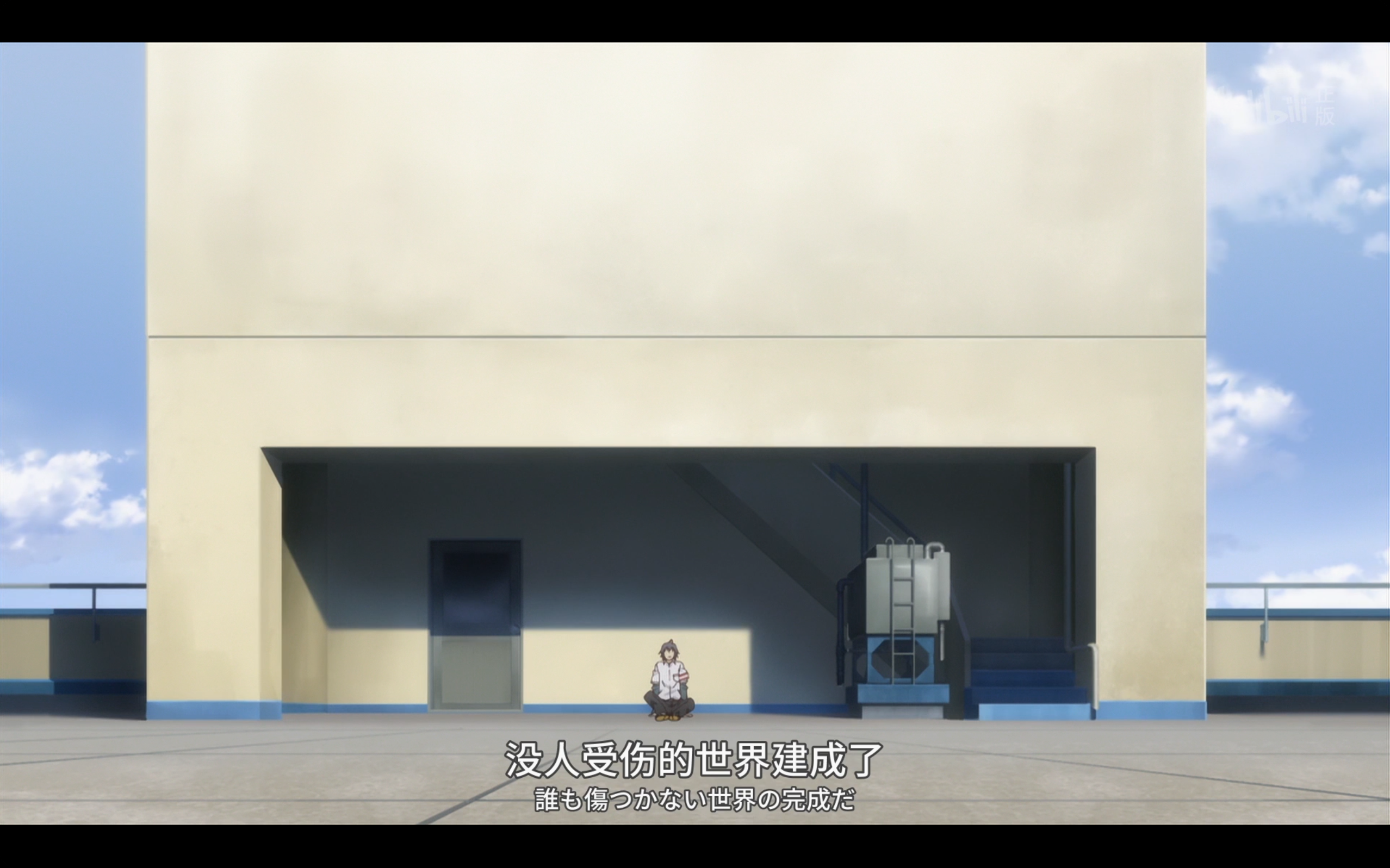
I watched few anime back then, so I couldn’t really claim to have critical appraisal skills, but luckily, what I encountered were excellent works. Later on, I watched a lot of random stuff, and I wasn’t negatively influenced; rather, my worldview became even clearer.
Besides studying, the rest of the time at school was spent reading extracurricular books (PE classes were short, and the damn school gym was closed on weekends). I read many, many novels at the time, mostly modern and contemporary literature, covering a wide variety of genres, both Chinese and Western.
To name a few that left a deep impression on me: domestically, Shi Tiesheng’s Notes on Principles (务虚笔记), Yu Hua’s The Seventh Day, Yu Qiuyu’s A Bitter Journey of Culture (this one is highly controversial), Wang Xiaobo (the Trilogy of Ages), Lu Xun, Lao She, Mo Yan, and so on.

From Japan: Natsume Soseki (I Am a Cat and Kokoro), Ryunosuke Akutagawa (Rashomon), Naoya Shiga, Yasunari Kawabata, Haruki Murakami, etc.

As for Western authors, there are too many, and I don’t remember many of them. Just to list a few: Camus, Milan Kundera, Hemingway, Shakespeare, Márquez… way too many.
Of course, it wasn’t all so-called “highbrow” literature; there was popular literature (light novels) too, though I didn’t read much domestic web fiction or outrageous romance novels. I was also deeply engrossed in authors like Jin Yong, Jiang Nan (Dragon Raja), and mystery novels.
Listing so many, I’m actually just recommending works (doge).
Although I mostly just skimmed through them, swallowing dates whole without seeking profound understanding. I didn’t read to fully comprehend these books; my life experience was far from enough to truly understand a genuinely good book. Perhaps it was purely to kill time, or for the resonance between the words and the depths of my heart, or perhaps, simply because I liked books.
People always love to praise Shi Tiesheng’s spirit of facing death directly, but other than The Temple of Earth and I from the textbooks, how many have truly read his works? Are his reflections on life in Notes on Principles and Fragments Written in Sickness really just empty talk about being born an “iron man”? Textbooks stereotype articles, and dogmatic appreciation only forces you to fit into the examiner’s testing points. You don’t need to express your personal insights; you just need to fill in the template-like nonsense perfectly. With this kind of routine, how can anyone experience the suffocating feeling of their heart being gripped tight when reading Notes on Principles? Literature inherently has no standard answers, yet education tries to cram it into standard answers. So it is regrettable that sitting in a classroom, one actually fails to learn “Language and Literature”.
Reading 1984, I was deeply shocked by the world the author created. I sincerely felt terrified by the oligarchy in the book: history can be fabricated at will, humans can be domesticated into “living creatures” possessing only biological traits, and what we call relationships between people can be completely severed. The phrase “Big Brother is watching you” lives on forever, and not without reason.
In addition, the imagination in Liu Cixin’s The Three-Body Problem is truly at the pinnacle. Who knows how many interesting ideas Liu Cixin exhausted for it. I also read many international sci-fi award-winning works, including epics like Foundation (Galactic Empire).
The depiction of emotions in The Shadow Thief is very delicate, even moving, which is why I like Marc Levy’s works.
And The Catcher in the Rye and To Kill a Mockingbird made me think about my own future and family.
There was also a book back then that shattered my perception of language learning, unfortunately, I can’t remember the title. I vaguely remember the contents being related to the “acquisition” theory.
During that time, I would ask myself: What are you interested in? What do you like? What do you hate? What do you want to do?
At that time, I told myself: Do more interesting things, meet more interesting people, don’t regret the choices you’ve made, and always maintain your curiosity.
To this day, I still romantically believe that “there must be a reason why I am here.”
The influence these works had on me was subtle and imperceptible, and I can’t quite articulate it clearly. But I always feel that if I hadn’t read these books, I would no longer be me.
Yet sadly, once these living, flesh-and-blood works enter the classroom, all their moisture is drained dry. Dogmatic appreciation forces everything into templates, and answering questions turns into bootlicking the test points. You don’t need to feel any visceral pain; just apply the template rules one by one, and you’ll eventually be right.
Especially for essays. Under the sun, must everything written by every student be exactly the same as the model essay? Must everyone use the same source material? Must everyone discuss the same argument and propose the same viewpoint? If your angle is different from what the examiner wants, you get no points?
In my view, the angles that can be abstracted from these prompts are either too simple and direct, or incredibly abstract, meaning you absolutely have to align your brainwaves with the examiner to get it right.
I also can’t understand high-scoring essays. I admire how they can use so much source material, angles, and flowery rhetoric to argue an obviously redundant point.
Thinking back to when squeezing out an 800 or 1,000-word essay was agonizing, now I can easily write a thousands-of-words tirade, even if it lacks structure.
For me, truths I agree with, I will naturally follow; truths I disagree with, no matter who tries to lecture me, it’s useless. Those template essays cannot touch people’s hearts (AI can easily generate such text now, anyway). And I believe that the truly crucial core of life lies exactly in the principles that others cannot teach you, that you can only realize yourself.
I just outputted a bunch of outrageous hot takes, but I’ve held it in for a long time, and writing it out feels much better.
I know very well that listing all those book titles earlier runs the risk of seeming a bit pedantic and show-offy. It’s not that I possess profound knowledge; it’s just that my own thin thoughts and reflections are not enough to pierce through this heavy “Iron House” (Lu Xun’s metaphor), so I had to wave the banners of my predecessors to bolster my voice.
Today, having reached university, my understanding of “exams and education” has become thoroughly clear.
I resent this evaluation system that relies solely on scores and GPA. It is like a massive, precise meat grinder, grinding all raw youth and burgeoning thirst for knowledge into uniform minced meat. You shouldn’t ask why you have to learn it; just obey. You cannot afford the leisure of straying from the test points, otherwise you are an anomaly.
But I cannot mock those classmates who desperately grasp for high scores and fight for postgraduate recommendation spots. They stare intensely at the carrot named “future” dangling in front of them, running desperately round and round the millstone named “GPA.” In this cramped world, there are mostly just ordinary people trying to secure a bit of stability and dignity. Since the machine only recognizes this stamp of approval, who can blame them for having to compromise just to make a living? Most of us are merely victims within this absurd system, crushing each other, yet each holding our own bitterness.
I am a loser under this system, but I ultimately cannot swallow this resentment. It’s one thing if the class is taught poorly, but they force you to read heavily-recycled, ancient PPTs and listen to condescending lectures, all under the guise of “it’s for your own good.” What exactly is good?
Students have a clear scale in their own hearts.
If you ask me, taking a wild, unorthodox path that no one around cares about, abandoning the visible “certainties” to pursue so-called passion and love—does it guarantee a good ending?
I don’t know.
I have no certainty in my heart. Maybe one day, I’ll crash and burn, tumbling into an even deeper quagmire. But if I stay where I am, I might suffocate myself to death.
There will always be a gap between reality and the ideal. Striving with all my might to pursue utopia—this is all I can do.
I am a very ordinary person. I probably realized long ago that there is a huge gap between me and others, but my heart is always unwilling to accept it, so I bury my head in hard work, occasionally paralyzing my nerves with retaliatory entertainment.
I don’t demand that the things I learn must yield some specific result; I only hope that I can properly cherish the substance they have already given me.
I love pure passion. I remember when I was obsessed with Gil Strang’s Linear Algebra course, sleeping at 3 AM and waking up at 11 AM to grind extra training, thinking from morning till night about getting the Lab to run successfully. All of that was truly pure and joyful.
Listen to everyone’s voices:
Manshi is a popular science uploader I really like, as well as Bidao, 3b1b, and Veritasium.
-
Four Years at Nanjing University - Software Engineering and Armchair Strategies
-
How Mentor Green Got Cuckolded: The Origins of the Academic Leap Forward Movement
$upd:$
I am very grateful you read this far, I didn’t think anyone would read it (just kidding). Made minor edits, I was a bit agitated at the time.
I sincerely hope that everyone can see their true selves clearly and preserve a bit of pure, personal fanaticism that belongs solely to you.
P.S. The English text above was translated by a Large Language Model without manual proofreading. Please excuse any unnatural phrasing or slight losses in the original emotional nuance.